Beginner Betta Tank
A simple single species tank focussed on the beautiful Betta fish. Colourful, inquisitive and low maintenance.
Minimum Volume
30 L
Maintenance
Low
Beginner Score
5/5
Stocking Plan
| Species | Recommended Count | Compatibility Links |
|---|---|---|
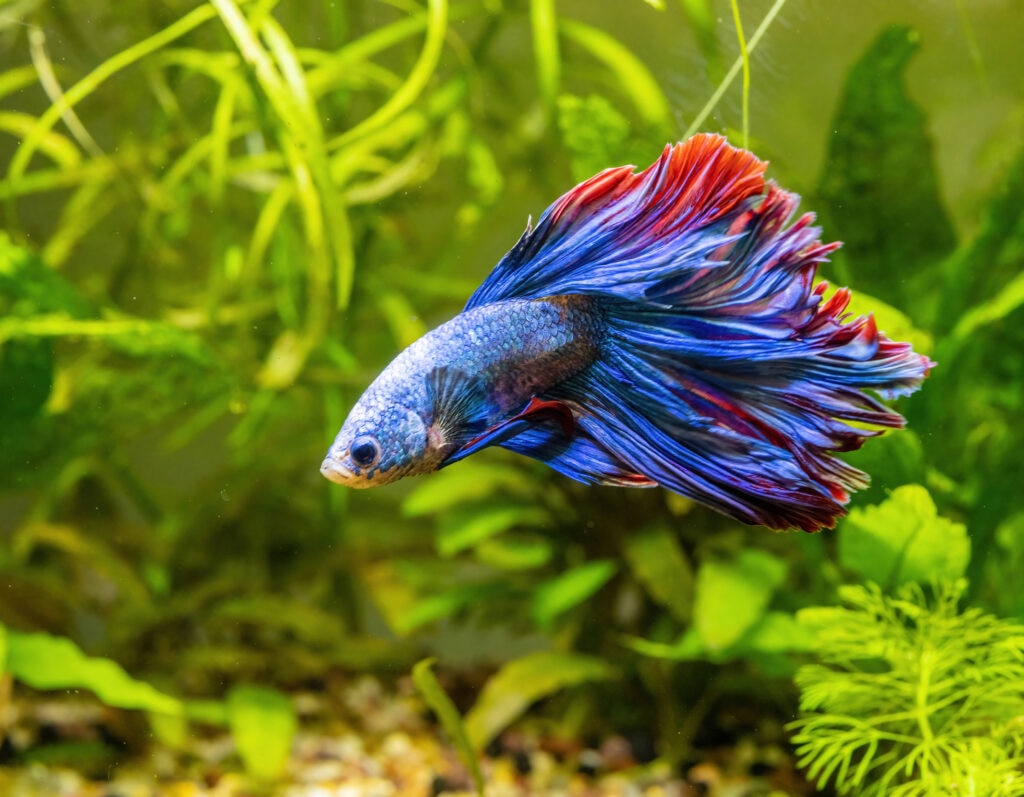 Betta Betta splendens | 1–1 | — |
Why This Setup Works
This combination works because:
- •Shared water parameters: temperature overlap around 24.0–30.0°C, pH overlap around 6.0–7.5, hardness overlap in very soft → medium.
- •Behaviour needs closer monitoring due to aggressive traits in the mix.
- •Feeding needs stay close enough for a shared routine, with staple and supplemental options.
Water Parameters Summary
| Parameter | Ideal Shared Range |
|---|---|
| Temperature | 24.0–30.0 °C |
| pH | 6.0–7.5 |
| Hardness | Very soft → Medium |
Recommended Foods for This Setup
Feeding guides: Betta feeding guide
For Betta (Small community fish)

Hikari Micro Wafers
High scoring wafer in small size class for this setup context.
Score 100Buy on Amazon
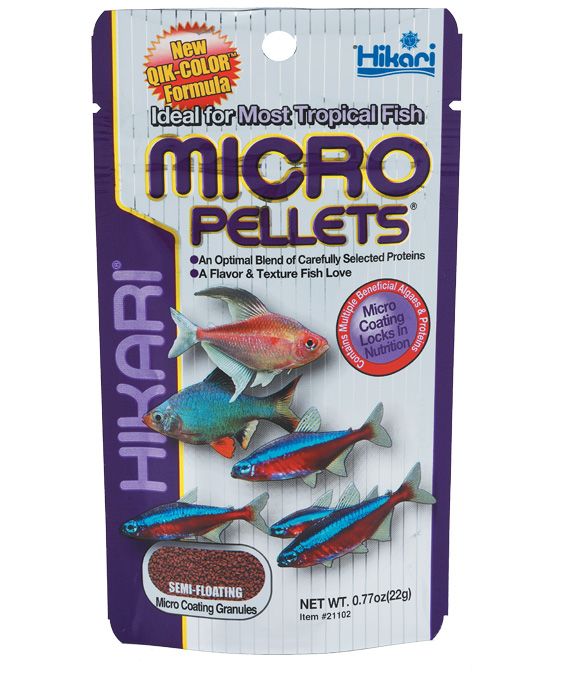
Hikari Micro Pellets
High scoring pellet in micro size class for this setup context.
Score 100Buy on Amazon

Ultra Fresh Apex Guppy
High scoring pellet in small size class for this setup context.
Score 97Buy on Amazon
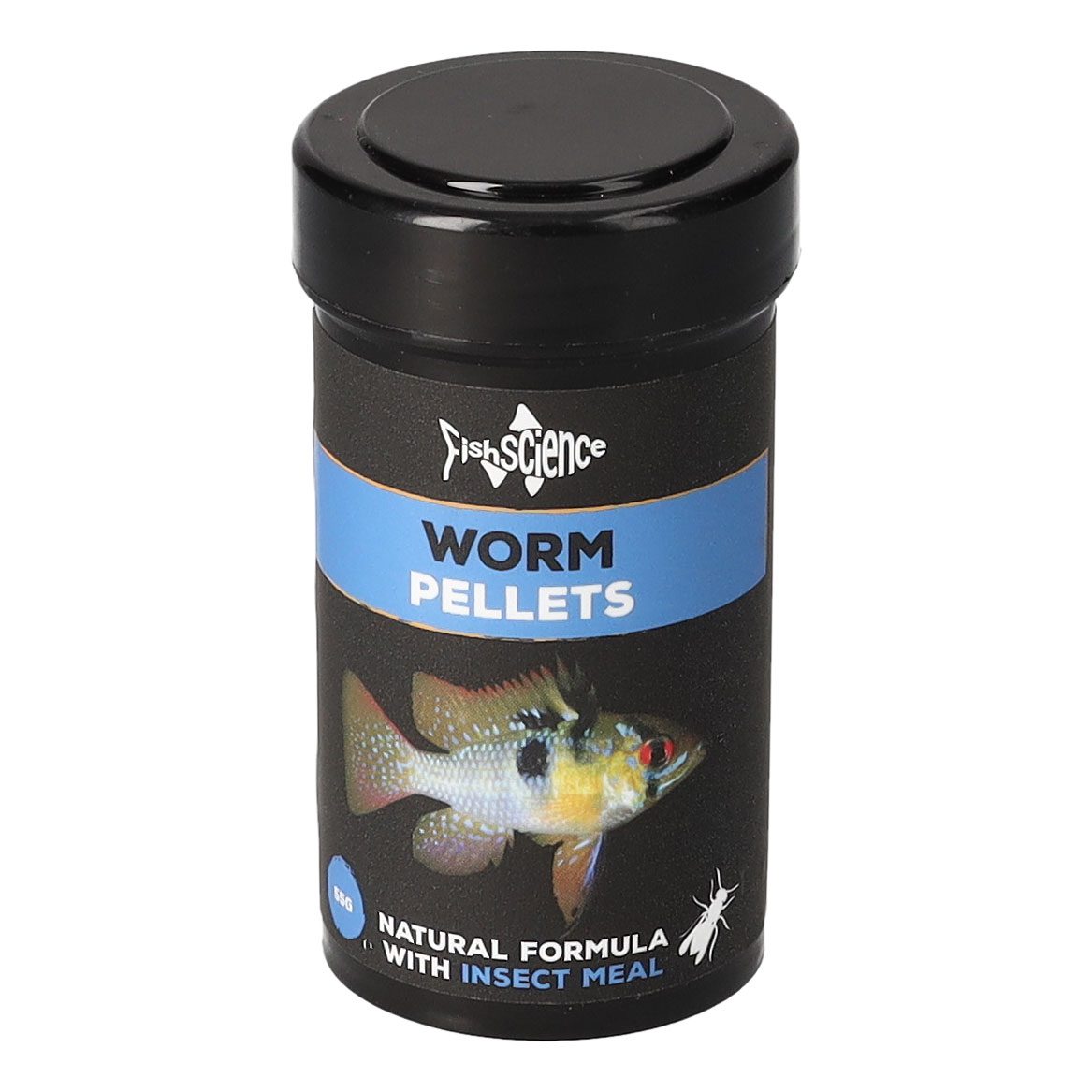
FishScience Worm Pellets
High scoring pellet in small size class for this setup context.
Score 97Buy on Amazon
Equipment Checklist
- • Tank: 30 L or larger
- • Heater: 50–100W class
- • Filter: Sponge or internal filter with gentle flow
- • Substrate: Fine gravel or sand
- • Plants: Low-maintenance planting for cover and stress reduction
Common Mistakes With This Setup
- • Adding full stock before the tank is fully cycled
- • Introducing schooling species in undersized groups
- • Overfeeding mixed communities instead of split portioning
Similar Beginner Setups
60L Beginner Community Tank
60 L · 5/5 beginner
Livebearer Starter Tank
80 L · 5/5 beginner
Amazon Soft Water Community
80 L · 4/5 beginner
Notes
Betta fish appreciate low flow and lots of live plants. Large finned varieties will especially enjoy large leafed plants to provide resting spaces near the surface.