
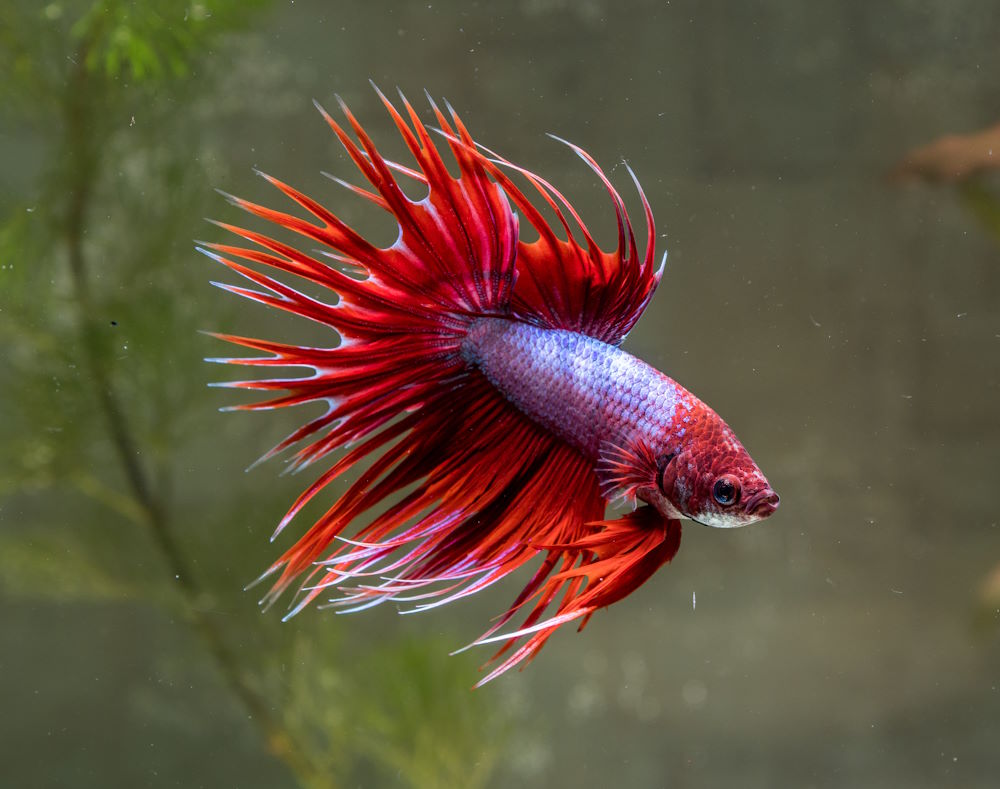
Best Food for Bettas – Diet & Feeding Guide
Betta splendens
Betta fish are surface-oriented, carnivorous fish that require a protein-rich, animal-based diet. While they will accept a range of prepared foods in captivity, selecting the correct pellet size, protein level, and food type significantly improves colour intensity, fin condition, and long-term health. For routine feeding, small floating pellets formulated specifically for bettas are ideal. These allow them to feed naturally at the surface, matching their instinctive hunting behaviour without forcing them to chase sinking particles through the water column.
Quick Take
Nutrition Profile
What They Eat in the Wild
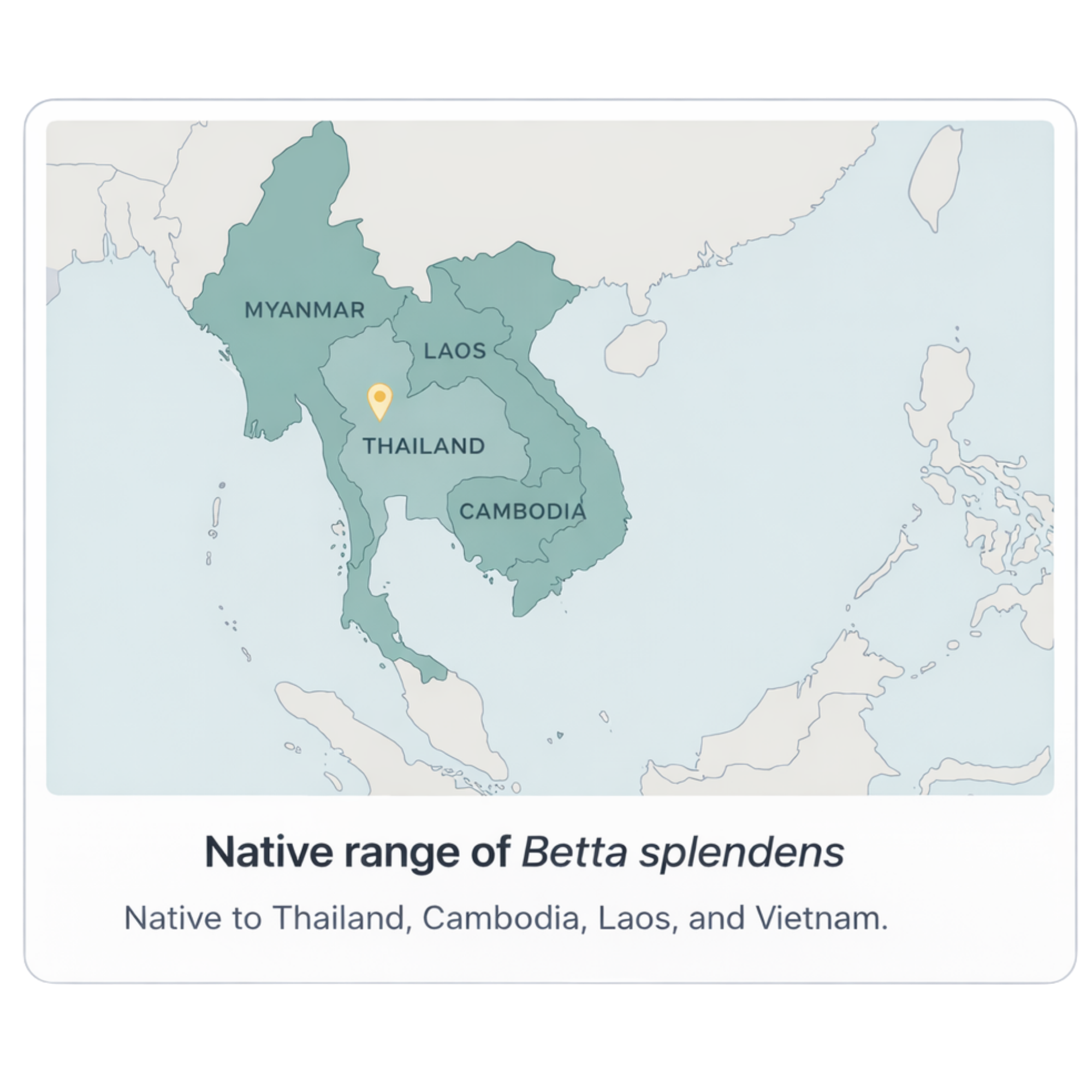
In their native habitats across Thailand and Southeast Asia, wild bettas feed primarily on: * Insect larvae * Mosquito larvae * Small aquatic insects * Zooplankton * Tiny crustaceans They are surface predators rather than plant grazers. While they may ingest trace plant matter incidentally, their nutritional needs are strongly aligned with protein-rich, animal-based sources. This natural feeding behaviour informs their captive diet: high protein, floating food types, and occasional live or frozen enrichment.
Best Options for Betta
Everyday feeding
- Floating betta specific micro pellets
- High Protein Formulations (40–55%)
- Clearly identifiable animal protein sources (fish meal, krill meal, insect meal)
Frozen foods
- Bloodworms (in Moderation)
- Daphnia
- Brine shrimp
Budget friendly
- At Least 40% Protein
- Animal protein listed among the first ingredients
- Pellet size appropriate for bettas
Foods to avoid
- Large Cichlid Pellets
- Hard, oversized floating pellets
- Very low protein tropical flakes
- Pellet sizes above 2 mm
- Diets where wheat or corn are primary ingredients
- Inappropriate pellet size and poor protein quality are more problematic for bettas than for many community fish.
Avoiding poor-format or filler-heavy foods helps keep feeding response and long-term condition stable.
Feeding Approach
1–2 small meals per day
- In small, controlled portions
- Rather than relying on a strict time limit, observe feeding behaviour. bettas should actively take pellets from the surface and consume them confidently. if interest drops or pellets are ignored, reduce the portion size.
- Consistent, moderate feeding helps reduce the risk of bloating and digestive stress.
Fry Feeding
Newly hatched betta fry require extremely fine food: * Infusoria (first days) * Liquid fry food * Finely powdered fry formulations * Newly hatched brine shrimp (as they grow) Standard pellets are too large for early fry stages. Protein demand is high during early development, but careful portioning is critical to maintain water quality in rearing tanks.
Breeding Nutrition
To prepare bettas for breeding: * Increase dietary variety * Incorporate frozen or live foods 2–3 times weekly * Maintain stable water conditions Higher-quality protein intake and increased food diversity can improve spawning readiness and conditioning.
Top rated foods for Betta
Live scoringRanked using live AquaIndex scoring.
| Food | Score | Protein | Key ingredients | |
|---|---|---|---|---|
#1 Hikari Micro Pellets | 100Elite | 43.0% | Fish mealKrill mealSoybean Meal | Buy on Amazon |
#2 Hikari Micro Wafers | 100Elite | 44.0% | Fish mealKrill mealWheat Flour | Buy on Amazon |
#3 FishScience Worm Pellets | 97Excellent | 41.5% | MealwormMycoproteinSilkworm Pupa | Buy on Amazon |
FAQ
How many pellets should I feed my betta?
Most adult bettas do well with 2–4 small pellets per feeding, once or twice daily. Pellet size varies by brand, so adjust based on the pellet diameter and your fish’s appetite. It is better to slightly underfeed than overfeed.
Can bettas overeat?
Yes. Bettas will often continue eating even when full. Overfeeding can lead to bloating, constipation, and water quality issues. Controlled portions and observation are important.
Should I give my betta a fasting day?
Some keepers include one fasting day per week to reduce the risk of digestive issues. While not strictly required, occasional fasting can help prevent bloating in fish that are prone to overeating.
Why is my betta spitting out pellets?
Common reasons include: Pellet size too large Pellet too hard Poor-quality formulation Fish not hungry Try smaller, softer, betta-specific floating pellets.
Can bettas eat only frozen food?
Frozen food can be part of the diet, but it should not replace a balanced staple pellet. Frozen foods are best used as enrichment 1–2 times per week.
Is 50% protein too high for a betta?
Protein levels between 40–55% are generally appropriate for adult bettas. The quality of the protein source matters more than the percentage alone.
Can I feed my betta the same food as my community fish?
Not ideally. Many community foods are lower in protein and may sink quickly, which does not match a betta’s natural surface-feeding behaviour.
Why does my betta look bloated after eating?
Mild temporary fullness is normal. Persistent swelling may indicate overfeeding, constipation, or poor pellet size. Reduce portion size and ensure appropriate protein and pellet diameter.